Discover why your tonearm cable matters more than you think. Learn how premium phono cables transform vinyl sound quality and what specs to prioritize.
Why your tonearm cable is the unsung hero of vinyl playback
Most audiophiles invest heavily in cartridges and turntable mechanics, yet the cable connecting the tonearm to the phono stage is often treated as an afterthought. The signal at this point in the chain is extraordinarily fragile — typically just a few millivolts from a moving magnet cartridge — which means even small amounts of interference can produce audible coloration or measurable high-frequency loss. A well-chosen tonearm cable for your vinyl system addresses these vulnerabilities directly, rather than leaving the phono preamp to compensate for problems it was never designed to fix.
Beyond raw signal level, this part of the chain also sits close to a running motor and a rotating platter — two sources of vibration and electromagnetic interference. Poor shielding at this point allows noise to enter the signal path in a way that no downstream component can fully correct. Recognizing this reality is what separates a truly optimized vinyl setup from one that merely sounds adequate.
How Kácsa Audió elevates your turntable setup with premium phono cables
Kácsa Audió has built its reputation not just by stocking cables, but by assembling and testing them in-house — a distinction that matters when the product needs to perform at the level demanded by phono-stage applications. Every assembled cable the company distributes can be evaluated at home, in your own system, before any purchase commitment. That kind of offer is uncommon in the cable market and reflects a hands-on approach to quality assurance.
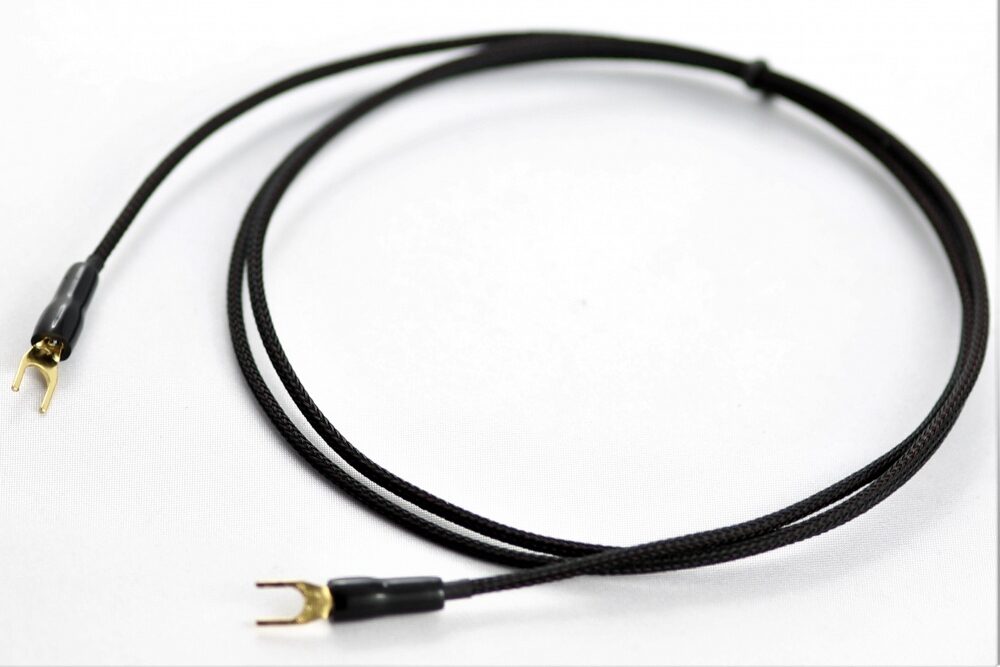
Their phono cable lineup spans a meaningful range, from the hand-assembled KCE-Phono series — built with Furutech RCA connectors, a DIN plug, and Neotech cable stock — to the Furutech FC-AG-12, which uses silver-plated OFC conductors and a four-layer shielding construction for demanding applications. Grounding cables are also part of the range, available in UP-OCC copper and silver variants, with terminations from rhodium-plated Furutech spades to gold-plated options. This breadth means a turntable owner can address every link in the phono signal chain from a single, specialized source.
Low capacitance, shielding, and grounding: What to look for in a tonearm cable
Capacitance is one of the most frequently misunderstood specifications when evaluating a tonearm cable. When total cable capacitance — added to the input capacitance of the phono stage — exceeds the range recommended by your cartridge manufacturer, the result is a measurable shift in frequency response: either a rolloff in the upper registers or an unwanted resonant peak. This is not a subtle, audiophile-only concern; it shows up in ways that affect how your records actually sound on a day-to-day basis.
Shielding construction and grounding are equally critical. Inadequate shielding allows hum and RF interference to contaminate the signal, while a poorly managed ground connection can introduce a ground loop — the characteristic low-frequency hum that frustrates vinyl listeners. A quality phono cable addresses both issues through double-layer or multi-layer shielding and a dedicated ground conductor designed to eliminate the conditions that allow ground loops to form in the first place.
Market trends and user preferences shaping the future of tonearm cables
Vinyl’s resurgence has brought a new generation of turntable owners into the market, many of whom approach system-building with a research-driven mindset. This shift has pushed demand toward cables with transparent specifications — documented capacitance figures, identified conductor materials, and clearly described shielding geometry — rather than vague claims about sonic character. Retailers that provide this level of technical detail are increasingly preferred by buyers who want to match their cable to their cartridge on measurable terms.
At the same time, customization is becoming a meaningful differentiator. The ability to order a tonearm cable in a specific length, with a chosen termination type, meets a practical need that standard retail packaging rarely addresses. Specialist assemblers who work to individual requirements — rather than fixed configurations — are well positioned to serve the more demanding end of the modern vinyl revival.